
Funeral Live Streaming
Whether livestreaming a funeral is disrespectful
A plain answer to a question many families ask before booking, including where the worry comes from and how to handle the service respectfully.
21 Oct 2026 5 min read
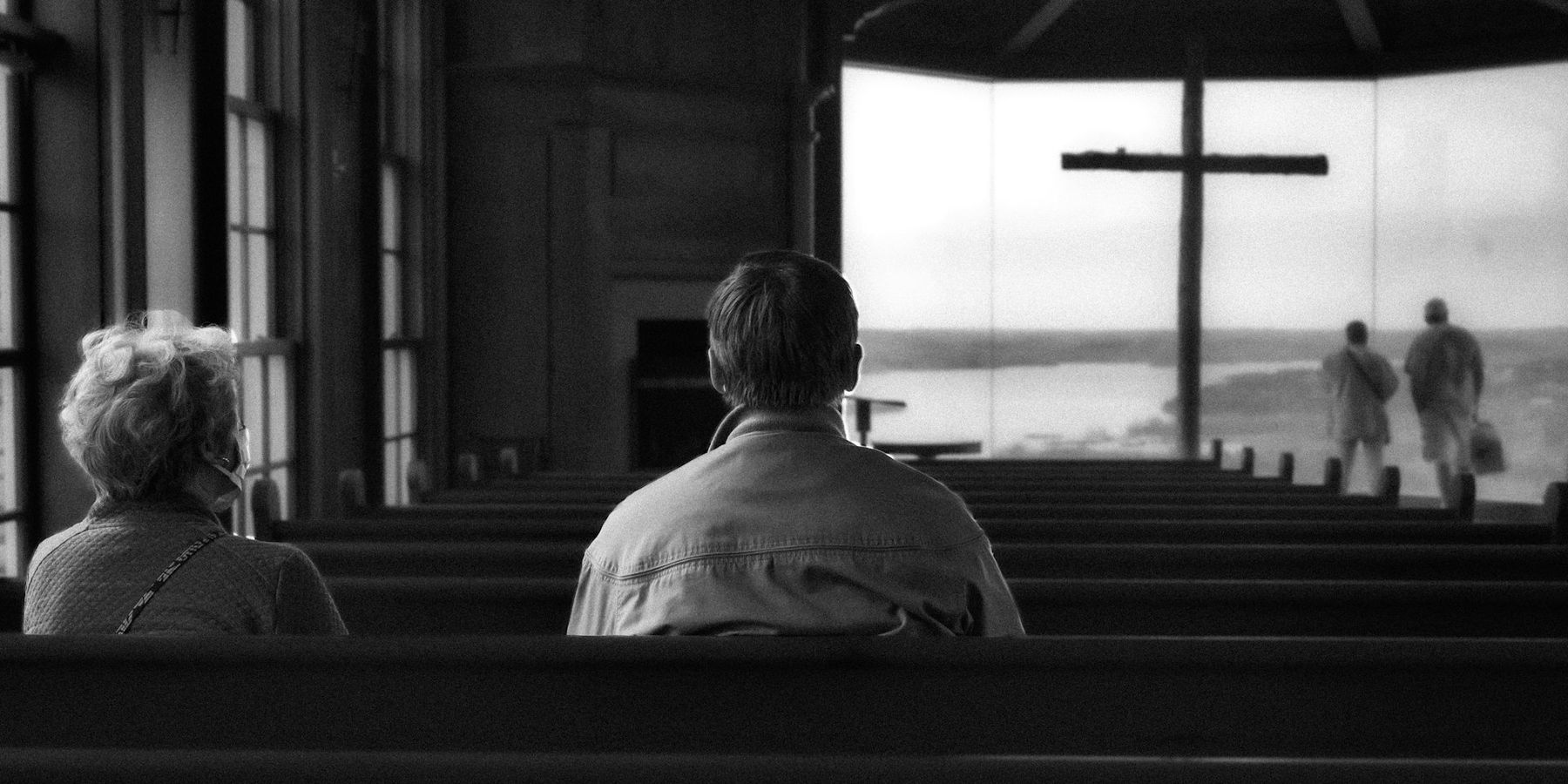
No, livestreaming a funeral is not disrespectful. It is a way of letting people be present when distance, illness, work or cost makes travelling to the chapel impossible, and in our experience families almost always feel better for having offered it.
The question itself usually comes from a good place. Someone in the family is trying to protect the service from feeling like a production, and that instinct is worth listening to even though the answer is reassuring.
Where the discomfort usually comes from
Most people picture a camera crew when they hear the word livestream. They imagine lights, cables across the aisle, someone standing up mid eulogy to get a better angle, and a service that quietly turns into a performance.
That is not how a funeral stream is run. A single camera sits on a tripod at the back or to one side, the operator stays seated and still, and the audio comes from the venue's own sound system or a small microphone already on the lectern. Guests who arrive later often do not notice the setup at all.
The other worry is about the people watching. Families sometimes feel that watching from a lounge room is a lesser form of attendance, or that offering the link gives relatives an easy excuse to stay home. Very few people choose a screen over a seat when they are able to travel, and the ones who use the link are usually the ones who had no other option.
What the stream actually changes about the day
Practically, very little. The celebrant runs the service the same way, the music plays the same way, and the order of proceedings does not shift to suit the camera.
Sydney is a reason this comes up more here than in smaller towns. Families are spread from the northern beaches to the south west, relatives live in regional New South Wales or overseas, and a weekday morning service can be genuinely out of reach for someone working or caring for a child. A link removes the choice between attending and managing the rest of life.
What the stream adds is a record. Many families watch the recording weeks later, when the day itself has blurred, and hear the eulogy properly for the first time. Grandchildren who were too young to understand the service often watch it years afterwards.
Decisions that keep it feeling respectful
Respect comes from the choices made around the stream rather than from whether one happens at all. These are the points worth settling with your funeral director before the day.
- Whether the camera stays on the celebrant and the lectern only, or also shows the congregation. Most families choose the front of the chapel, so mourners are not filmed while they are upset.
- Whether the stream is private, which usually means a link shared only with the people you choose, rather than anything searchable or public.
- Whether the committal, the graveside portion or the final viewing is included or left out. Many families stream the chapel service and stop before the committal.
- Whether the recording is kept and sent to you afterwards, and who in the family holds it.
- Whether anyone speaking would prefer not to be filmed. A grandchild reading a poem may feel differently to an adult giving a eulogy, and the camera can be paused.
Make these choices early, because asking them on the morning adds pressure to a day that already has plenty. Your funeral director will have had the conversation many times and can pass your preferences straight to us.
Culture, faith and family disagreement
Some traditions have clear views about recording during a service, and some do not. Orthodox, Jewish, Muslim and Hindu families each approach it differently, and within any faith individual clergy hold their own position. The simplest approach is to ask the celebrant or religious leader directly, well before the day.
If one part of the family is opposed, it is usually worth asking what specifically they are opposed to. Often the objection is to filming the mourners or to the link being public, both of which can be ruled out without cancelling the stream. A genuine disagreement about whether to stream at all is rarer than a disagreement about how.
Where a service is streamed, people watching from home behave much as they would in the chapel. They dress properly, they sit quietly, and they often light a candle or hold a photograph. We have had families in other countries gather around one laptop at three in the morning because that was the only way to be there.
What to tell the people watching
A short note with the link helps. Tell people the service start time in Sydney time and ask them to join a few minutes early, mention that the stream is private and not to be reshared, and say whether a recording will be available afterwards.
It also helps to say what the stream will and will not show, so nobody is surprised. If you have chosen to end the stream before the committal, let people know, otherwise they will sit watching a blank screen wondering whether something failed.
If you are weighing this up for a service in the coming weeks, our page on funeral live streaming in Sydney covers how the setup works at chapels, churches and gravesides across the city.
The families who ask whether this is disrespectful are, without exception, the ones who go on to make careful and considerate choices about it. Asking the question is a sign you will handle it well.
Planning an event?
Tell us what you are organising and who needs to watch from somewhere else.
Book a stream